Minimally Invasive Spine Surgery
1 Hoag Drive, Newport Beach, CA 92658
(949) 764-1411

Looking for Minimally Invasive Spinal Surgery?
Our comprehensive team of specialists, physical therapists and spinal surgeons put patient-focused care at the forefront to provide the best quality care for the neck and back.
We’re dedicated to helping patients come back strong from spinal issues, utilizing next-generation technological advances, conservative approaches and the latest and most effective minimally invasive procedures. From spinal fusion to ending the pain of a herniated disc, for minimally invasive spinal surgery contact the Spine Institute today at (949) 764-1411 or through our online form.
Read on to learn about minimally invasive spinal surgery, including the specific types and conditions that can be treated and the many benefits of utilizing less-invasive techniques.
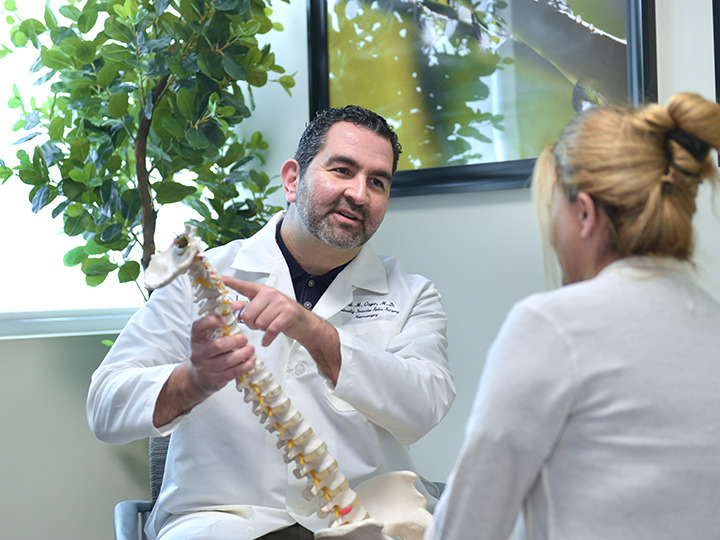
What is Minimally Invasive Spinal Surgery?
Minimally invasive spinal surgery is a type of surgery that uses short incisions, insertable cameras and small, specialized instruments to access and correct problems with the spine, including the vertebral column, spinal discs and surrounding soft tissue.
Minimally invasive spine surgery is an alternative to traditional “open” surgery for the spine, which is often performed through a long incision through the skin. Potential benefits of minimally invasive spine surgery include less postoperative pain, faster recovery time and less visible scarring.
- Types of Surgery
- Conditions Treated
- Benefits
- Find a Specialist
What are the Different Types of Minimally Invasive Spinal Surgery?
There are several types of minimally invasive spine surgery, usually categorized by which condition or part of the spine they're designed to treat.
Different Types of Minimally Invasive Spine Surgery
Microdiscectomy is a procedure used to treat a herniated disc, a condition in which one of the natural cushioning pads between the vertebrae become damaged or bulge out of shape due to injuries or disc degeneration. Disc bulges can cause back pain by pressing on the spinal nerves (also called nerve compression). During a microdiscectomy, a healthcare provider uses a special microscope and instruments passed through small skin incisions to remove the herniated discs.
In this procedure, minimally invasive techniques are used to remove a damaged or distorted disc that’s causing pain in the neck (the cervical spine) before replacing it with an artificial disc.
A form of spinal decompression surgery, minimally invasive laminectomy is a procedure that utilizes less-invasive techniques to treat spinal stenosis, a condition in which abnormal narrowing of the spinal canal — the hollow space inside the spinal column that protects the spinal cord — puts pressure on the spinal cord or nerve roots. During the procedure, surgeons fully remove the lamina, a part of each vertebra that lies close to the skin and covers the spinal canal, giving the nerves and spinal cord more room.
Another form of spinal decompression surgery, laminotomy uses less-invasive techniques to remove only part of the lamina.
Percutaneous fusion, also called minimally invasive spinal fusion, is a technique used to treat spinal instability, a condition in which vertebrae have become prone to abnormally moving or shifting out of place due to an injury or deformity. During a percutaneous fusion procedure, surgeons use minimally invasive techniques to insert rods, screws or plates, fusing damaged or unstable vertebrae together to increase their stability. Transforaminal lumbar interbody fusion or TLIF is a common type of spinal fusion used to treat instability in the spinal bones of the lower back.
Kyphoplasty is a type of minimally invasive procedure used to treat compression fractures of the spine. Often caused by aging or osteoporosis, these issues can cause a vertebra to collapse, resulting in a stooped posture and back pain. During the kyphoplasty procedure, a thin tube is inserted through a small incision in the back. At the tip of this tube is a balloon. Once the balloon is in place, it is inflated to force a damaged vertebral body into a more normal position and shape. A special medical cement is then used to help the vertebra maintain that shape.
Scoliosis is a condition characterized by having an abnormal curve to the spine. Minimally invasive scoliosis correction treats spinal curvature by using less-invasive techniques to insert and attach rods and screws that can gradually correct the abnormal curvature of the spine.
Minimally-Invasive Surgical Techniques at Hoag Include
Robotic-assisted surgery is a type of minimally invasive surgery in which a robotic system assists the surgeon performing the procedure. During a robotic surgery procedure, a surgeon precisely controls robotic arms fitted with small surgical instruments. These instruments are inserted into the body through small incisions, then viewed on a high-definition display outside the body to complete the surgery. Hoag was the first hospital on the west coast to offer the most advanced minimally invasive robotic navigation platform available for spine surgery called Mazor X Stealth™. Additionally, Hoag has been designated a Center of Excellence in Robotic Surgery (COERS) by the Surgical Review Corporation, signifying exceptional expertise in robotic surgeries and the highest standards for safety, outcomes and patient care.
Another minimally invasive spine surgery technique is performing surgery using specialized instruments called tubular retractors. A tubular retractor is made up of expandable tubes that separate the muscles of the back and move them out of the way until a damaged portion of the spine can be accessed. The procedure is then performed with small instruments through the tubular retractor.
This procedure utilizes an endoscope — a thin, flexible tube with a lighted camera at the tip — to assess spinal issues, damage or disease. By passing the endoscope through small incisions in the torso, surgeons can remove spinal tumors, collect tissue samples for biopsy and other issues.
Stay up-to-date on the latest news from Hoag
By submitting this request, you agree to receive communications from Hoag and accept our Privacy Policy and Terms of Use.